How Do You Compare Franchise Brands?

October 31, 2025

A Practical Guide for Anyone Exploring Business Opportunities in Canada

This article will discuss how to compare franchise brands and find the best franchises to buy, not just the lowest cost franchise but the best franchise to own – one that is Just Right for You!


The Big Question: How Do You Compare Franchise Brands?

When you start exploring business opportunities in franchising, one of the first surprises is just how many brands exist — even within the same industry.


Let’s use painting franchises as an example.


In our portfolio of 800+ franchise brands, we represent 15 different painting franchises.

Yes, you read that right — fifteen!


Why so many? Because the home painting industry is a $25 billion-plus market in the U.S. (and steadily growing in Canada).


It’s also highly fragmented — even the top national players don’t hold 2% market share.

Translation: there’s plenty of room for new owners and fresh competition.


That’s what makes it one of the best franchises to buy if you want a scalable, service-based business with strong consumer demand.


🎯 What Makes One Franchise Different from Another?

If you’re comparing franchise brands — painting or otherwise — these are the six major dimensions to consider before you buy.

1️⃣ Staffing Model – Employees vs. Subcontractors

Employees: Give you more control over customer experience, training, and scheduling.

Subcontractors: Keep you lean, flexible, and easier to scale in multiple territories.

➡️ The right choice depends on your management style and how hands-on you want to be.


2️⃣ Client Type – Residential vs. Commercial

Residential: Homeowners need repainting every 4–7 years, creating repeat business.

Commercial: Think national contracts with big-box retailers or property managers — instant volume from day one.

➡️ Some brands blend both, offering year-round revenue balance.


3️⃣ Services – Speed vs. Luxury

Speed-focused: “One-Day Interiors” style — quick jobs, faster cash flow.

Luxury brands: Quality finishes, additional services and lots of attention to the customer experiences — average ticket up to 5× higher.

➡️ Both can be profitable; your decision depends on your market and personality.


4️⃣ Marketing Support – Centralized vs. Local

Centralized: Corporate-run lead generation and national advertising.

Local: You drive marketing with franchisor tools and templates.

➡️ Decide whether you prefer autonomy or a turnkey system.


5️⃣
Territory – Emerging vs. Established

Emerging brands: Larger open territories = more long-term upside.

Established brands: National recognition and proven systems, but fewer available areas.

➡️ The “best franchise to buy” isn’t always the biggest name — sometimes it’s the one that’s still expanding in your backyard.


6️⃣
Ownership Model – Semi-Absentee vs. Owner-Operator

Semi-absentee: Manage part-time once the team is trained and running smoothly.

Owner-operator: Be the day-to-day leader for faster profitability.

➡️ It’s about aligning your lifestyle and income goals with the model.


🧩
The Hidden Challenge: So Many Choices, So Little Time

Comparing even a single category like painting franchises across all these factors could take weeks, if not months.


And after all that research, you might find your favourite brand isn’t even available in your province.


Sound like a full-time job already?

That’s because it is.


🚀
The Smarter Way: Work with a Franchise Consultant

A Franchise Consultant helps you skip the overwhelming tasks and focus on what truly matters — aligning the right business opportunity with your skills, lifestyle, and financial goals.


Here’s what a consultant brings to the table:


• 🎯 Objective comparisons between brands

• 💰 Investment range and ROI insights

• 🧩 Territory availability checks

• 🧭 Guidance on financing and due diligence


Instead of “analysis paralysis,” you’ll move from
research to results — faster, smarter, and more confidently.


🏁 Final Thought: Stop Comparing, Start Owning

Owning a franchise isn’t just about choosing a logo — it’s about finding a system that fits you.


Whether you’re exploring painting franchises, home services franchises, or other business opportunities in Canada, expert guidance can help you identify the best franchises to buy and start building the lifestyle and legacy you want.


👉 Ready to explore?

Let’s find the franchise that fits your goals — and your future.
Top Drivers for Investing in a Franchise
January 6, 2026
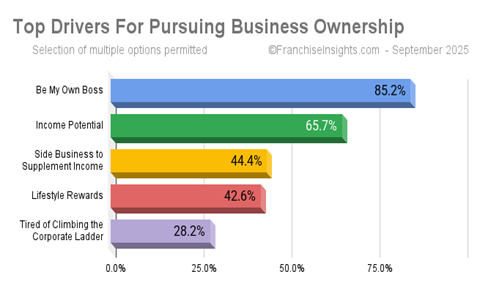
Insights from a Nationwide Franchise Investor Survey Every year, an independent marketing and lead-generation organization within the franchise industry conducts a large annual survey to understand what truly motivates people to explore business ownership. The most recent results, published in October 2025 , offer a clear and compelling picture of today’s aspiring entrepreneurs — and confirm what I hear every week in conversations with professionals considering what’s next. Despite differences in age, background, and career stage, one theme consistently rises to the top: people want more control over their future. Who Is Exploring Franchise Ownership Today? With Baby Boomers retiring in record numbers and Gen-X and Millennials now representing the largest share of franchise investors, business ownership is no longer limited to one generation or life stage. What unites them? A shared desire to: Reduce dependency on employers Gain more autonomy Build something they truly own In short: control their own destiny. The Top Motivations for Business Ownership Survey participants were asked: “Why do you want to own your own business?” (Multiple answers were allowed.) Here’s how the responses ranked — and what they tell us. 1. Be My Own Boss (85.2%) This remains the c lear and dominant motivator — and has for years. Not income. Not flexibility. Not even lifestyle. The strongest driver is autonomy. People want: Control over decisions Freedom from corporate politics Ownership over their time and direction More than anything, they want to stop feeling like their future is dictated by someone else’s priorities. 2. Income Potential (65.7%) Income remains a strong second — particularly in a time marked by: Layoffs and restructurings Salary caps Rising cost of living However, it’s telling that financial upside ranks behind independence. For many, income potential is about security as much as growth. 3. Side Business to Supplement Income (44.4%) For the first time , this motivation moved into third place — overtaking lifestyle rewards. This shift suggests growing interest in: Semi-absentee or part-time ownership Shared ownership models Lower-risk entry points into entrepreneurship Retaining an existing income stream while building equity In uncertain economic times, many people prefer a measured, strategic path into ownership rather than an all-or-nothing leap. 4. Lifestyle Rewards (42.6%) While still important, this motivation dropped from 47.1% in late 2024. Lifestyle rewards typically include: Working from home Flexible schedules Seasonal or locally focused businesses The pandemic proved that flexibility can work — even as many employers have enforced “back to office” mandates. As a result, work-life balance remains a priority, just no longer the primary driver. 5. Tired of Climbing the Corporate Ladder (28.2%) Nearly one-third of respondents cited fatigue with corporate life. This reinforces something I see consistently: many aspiring business owners bring significant professional experience , leadership skills, and maturity — they’re not running from work, they’re moving toward something more fulfilling. What These Results Really Tell Us Most people exploring business ownership today are not chasing a fantasy. They are looking for: Greater control Stability and optionality A smarter long-term strategy A business that fits their life — not the other way around That’s why the right business matters far more than any business. Where Guidance Matters Most With thousands of franchise and business options available, the challenge isn’t access — it’s clarity. Understanding: Why you want ownership What role you want the business to play in your life How much risk you’re comfortable taking What structure fits your current reality These answers shape everything that follows. My role as a consultant is to help people cut through the noise, align opportunity with intention, and determine whether business ownership makes sense — and if so, what kind of ownership actually fits. Final Thought If any of the motivations above resonate with you, you’re not alone — and you’re asking the right questions at the right time. The goal isn’t just to own a business. It’s to own the right one , for the right reasons.
Man in blue shirt with arms crossed, smiling. Text:
December 30, 2025
Why Leadership Beats Technical Skill in Franchise Ownership One of the most common concerns I hear from people exploring franchise ownership sounds like this: “I like the idea of owning a franchise… but I don’t know plumbing, fencing, or senior care.” It’s a fair concern — and a very common one. But here’s the reality: You don’t need to be an expert in the core service to own a successful franchise. In fact, many of the most successful franchise owners have never performed the service their business provides. The Biggest Franchise Myth: “I Have to Do the Work” Many people assume franchise ownership means: You’re the plumber You’re installing the fence You’re providing hands-on senior care That’s rarely the case. In most franchise systems, the model is intentionally designed so the owner leads the business — not the toolbox. Here’s how it typically works: • ✅ The franchisor teaches the core service Through structured training, manuals, systems, and ongoing support. • ✅ Your GM or technicians deliver the work Skilled employees or subcontractors handle day-to-day operations. • ✅ The franchisor helps you recruit From plumbers and fence installers to caregivers and general managers. • ✅ You focus on growth and leadership Sales, marketing, hiring, culture, and scaling the business. What Franchisors Actually Look For If you’re worried about not having technical experience, here’s some good news: That’s not what franchisors care about most. What does matter? Transferable Business Skills Franchisors love candidates with experience in: Sales and business development Managing and motivating teams Leadership and decision-making Following systems and processes Personal Traits That Can’t Be Taught Just as important are traits like: Determination Perseverance Grit (especially when things get uncomfortable) Coachability 👀 You can teach someone how to install a fence. You can’t easily teach someone to lead, adapt, and stay committed when challenges arise. Owner vs. Operator: A Critical Mindset Shift Successful franchise ownership isn’t about doing the work. It’s about building the engine that gets the work done. That engine includes: The right people The right systems The right culture Consistent execution When owners stay focused on leadership instead of tasks, the business becomes scalable, valuable, and often far more flexible. Final Thought If you can: Lead people Follow a proven system Stay committed through the learning curve Then the what of the business can be learned — or delegated. Franchise ownership isn’t about being the expert. It’s about being the leader. If you’re curious which franchise models are designed specifically for this type of owner, that’s a great conversation to have.
September 2, 2025
Why Building a Franchise in Canada Can Be Your Ticket to Tax-Free Wealth
August 6, 2025
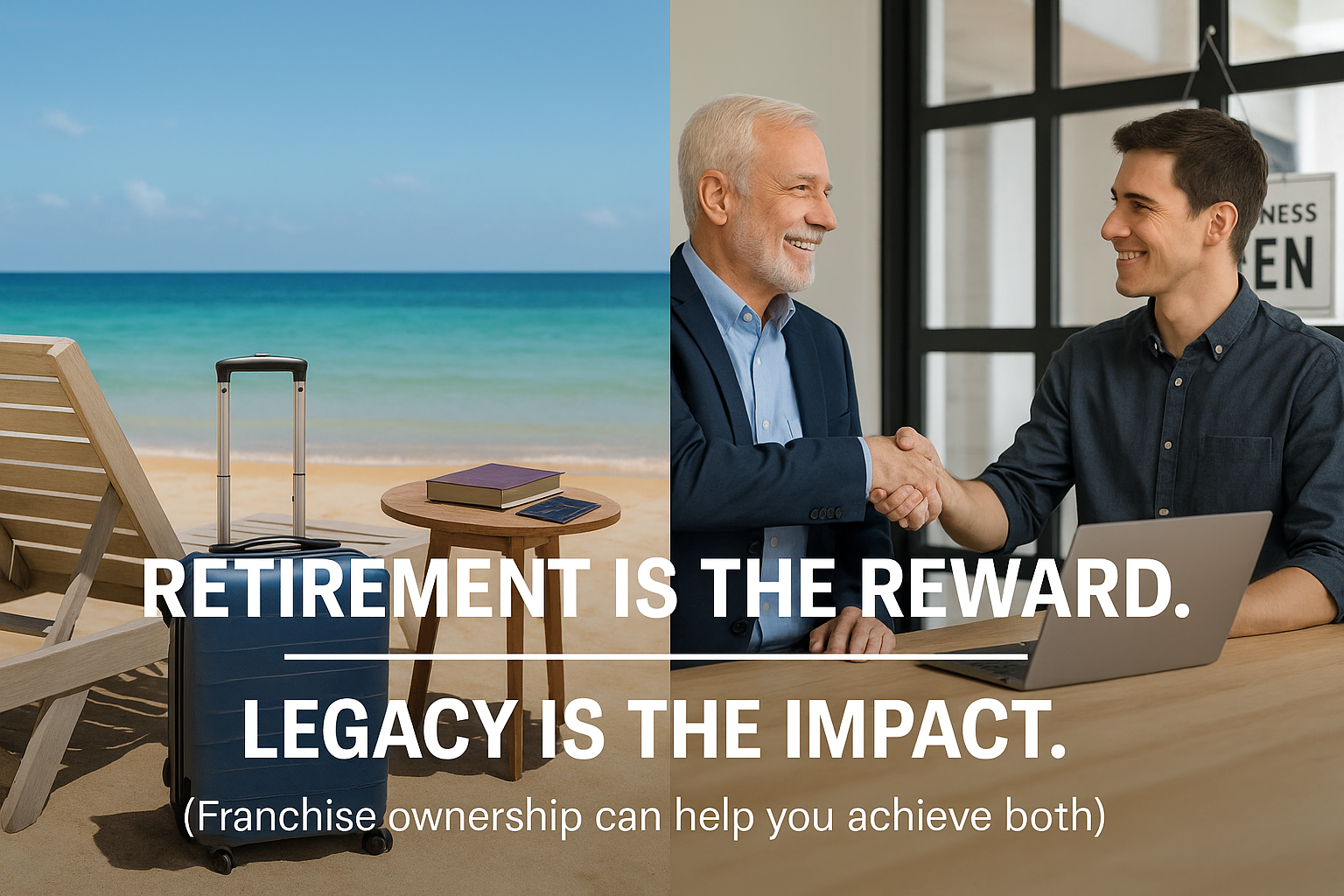
Retirement is the Reward Legacy is the Impact
July 31, 2025
The Top Professions that Excel in Franchise Ownership and Why !